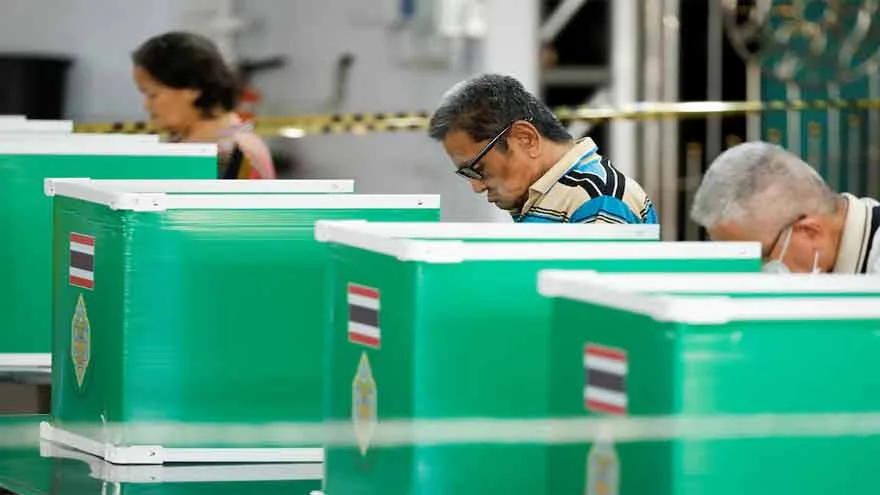
In a three-way battle defined by progressive change and populist sentiment, Thai voters lined up at polling stations across the country this past Sunday. The election saw Prime Minister Anutin Charnvirakul set the stage for a December snap vote amid ongoing tensions with Cambodia, where he sought to capitalize on growing nationalist fervor.
Charnvirakul took power less than two months ago after leading an administration that toppled the incumbent populist Pheu Thai party. Despite his brief tenure, analysts believe Charnvirakul strategically timed this election for maximum voter appeal amid heightened nationalistic sentiments.
Pheu Thai, led by billionaire former Prime Minister Thaksin Shinawatra’s son and daughter, remains a formidable force yet struggles to secure majority support. They had been in power following the ouster of Paetongtarn Shinawatra, also from Pheu Thai.
The People’s Party, known for its structural reform agenda, led opinion polls during the election campaign. Observers predict that despite capturing significant public sentiment, it may lack a parliamentary majority by itself, raising fears of political instability recurring as in previous elections.
Pheu Thai’s recent troubles and nationalist fervor have created conditions ripe for another round of coalition negotiations. The People’s Party, which narrowly won last year’s poll but failed to form government due to legislative obstacles, is now recalibrating its strategy by integrating local figures from rival parties into their ranks in hopes of securing support.
Meanwhile, former Prime Minister Abhisit Vejjajiva has resuscitated his moribund Democrat Party and may emerge as a key player within any future coalition. The election’s outcome could determine whether Thailand breaks free from its cycle of political instability, economic doldrums, and frequent shifts in power—questions that will be decided by Thai voters come election day.
In parallel to the electoral maneuvering, Thais are voting on whether to replace their 2017 constitution—a junta-drafted charter criticized for concentrating power. If approved, this process could herald new beginnings toward a more democratic framework, as political elites struggle to navigate the enduring tussle between monarchy and popular movements in Thai governance.
Bilal Maqsood Returns with Latest Single O're Saajna Singer Bilal Maqsood has made a return…
Islamabad Authorities Reopen Markets and Shops Authorities in Islamabad have granted permission for business centers…
Eva Longoria entered Hollywood with the goal of becoming financially independent. In a recent interview…
Hyderabad Kingsmen defeated Karachi Kings by four wickets in the 20th match of the Pakistan…
A second humanitarian aid flotilla is set to depart from Barcelona, Spain, carrying medical supplies…
Tyson Fury, the heavyweight boxer, has spoken about a personal loss that occurred just days…
This website uses cookies.
