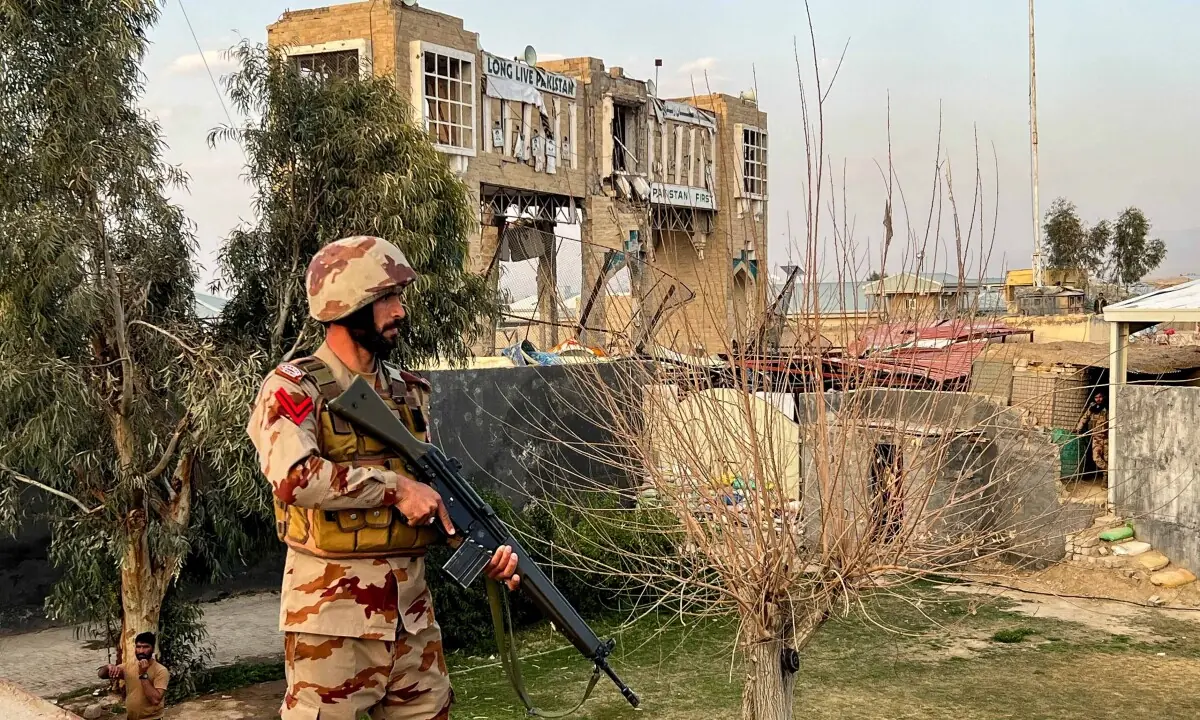
ISLAMABAD: In a drastic response to recent attacks by the Afghan Taliban using rudimentary drones, the Pakistani government has imposed an immediate ban on flying any type of unmanned aerial vehicles (UAVs) across the country. The decision follows several reported drone strikes in various parts of Khyber Pakhtunkhwa.
ISPR chief Lt Gen Ahmed Sharif Chaudhry disclosed that Afghan forces attempted to carry out these attacks using “rudimentary drones” targeting areas such as Swabi, Abbottabad, and Bannu. However, effective anti-drone systems thwarted the Taliban’s attempts.
Dawn reported at least six people were injured across three incidents—two in Bannu and one each in Swabi. In Bannu, a mosque was struck during iftar prayer hours, resulting in five worshippers being wounded by a quadcopter. An attack near a girls’ school in Swabi also injured one student while another narrowly escaped. The drone’s explosive device was later identified as homemade.
No casualties or damage were reported when a UAV over the cantonment area of Abbottabad came under attack and was neutralized around 1 pm by military forces, per a local District Police Officer (DPO) confirmation.
The interior ministry issued a directive to chief secretaries across provinces banning quadcopters and UAVs from flying outdoors for immediate effect. Provincial administrations enforced these bans with varying durations—such as Islamabad’s two-month restriction under Section 144 of the Code of Criminal Procedure, enforceable by local police.
In Khyber Pakhtunkhwa, the Home and Tribal Affairs Department banned drones, quadcopters, UAVs, helicams, camcopters, and other remotely controlled aircraft for one month. The Balochistan home department also imposed an immediate ban on all UAVs, quadcopters, camcopters, and remote devices, effective immediately.
The bans were deemed necessary to safeguard public safety, protect government installations, key personalities, and gatherings. These measures reflected heightened security following recent skirmishes between Pakistan and Afghanistan.
Punjab had already banned drone use for 30 days starting Wednesday. Sindh’s additional chief secretary imposed a two-month ban on law enforcement and intelligence agencies. Meanwhile, Gilgit-Baltistan implemented the interior ministry directive to enforce bans across districts with immediate effect.
While these restrictions apply broadly, they exclude law enforcement agencies, whose operations are considered essential amid ongoing security concerns.
The Federal Communications Commission (FCC) is set to vote on a proposal that could restrict…
Annual Matric Exams Kick Off in Karachi The Annual Matric Examinations have commenced today across…
White House Directs Staff Against Insider Betting The White House has issued a directive prohibiting…
Supernet Technologies Limited has secured a multi-million US dollar cybersecurity contract through its subsidiary, Supernet…
On Constitution Day, President Asif Ali Zardari and Prime Minister Shehbaz Sharif stressed the need…
Sydney Sweeney, in a recent interview with E! News, revealed her skincare routine that has…
This website uses cookies.
