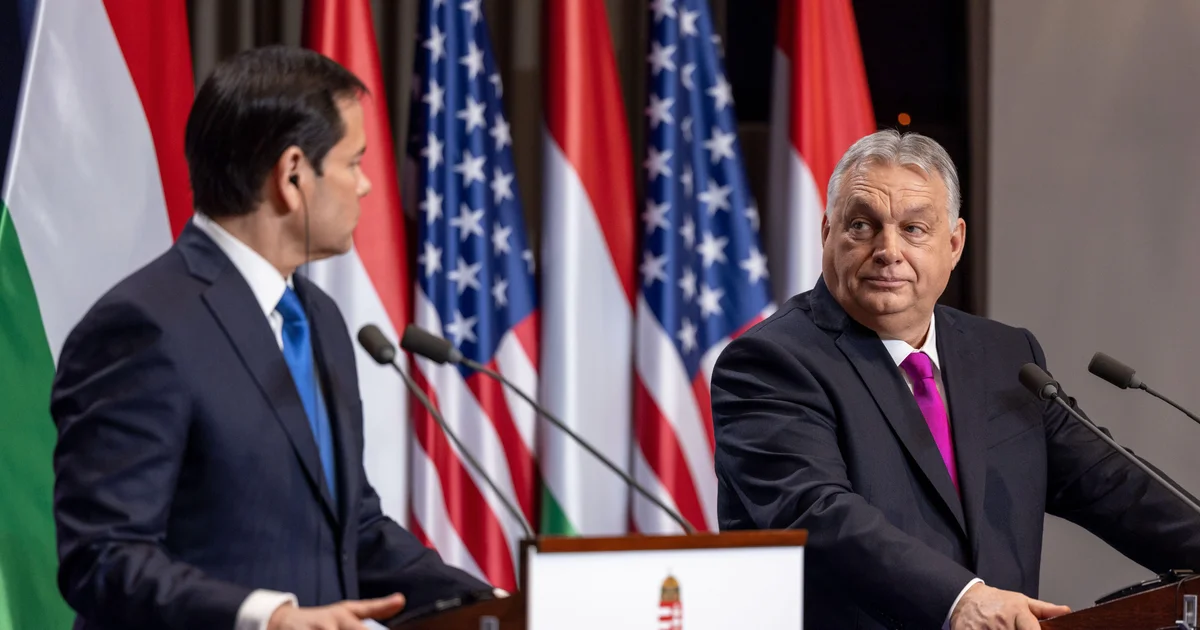
The United States and Hungary have forged ahead with a significant civilian nuclear cooperation agreement amid political tensions that could influence the next parliamentary elections in Budapest. Secretary of State Marco Rubio’s recent visit to Hungary underscored the Trump administration’s strategic push for closer ties with a critical ally at an opportune yet fraught moment.
During meetings with Hungarian Prime Minister Viktor Orbán and his government, Rubio and Orbán signed off on this pact, which is set to solidify their nuclear partnership in the coming years. The deal emerged just two months before Hungary’s upcoming elections, casting shadows over the future of Orbán’s tenure.
In November 2025, they launched negotiations for a Memorandum of Understanding on Nuclear Energy, laying the groundwork for collaboration across various sectors within the civil nuclear industry, including small modular reactors (SMRs) and spent fuel storage management.
Hungary has long been reliant on Russian energy technology, particularly in its nuclear sector. Orbán’s government has maintained close ties with Russia despite criticism from the United States regarding President Vladimir Putin’s conflict in Ukraine. The new deal marks a shift for Hungary as it opens up opportunities to diversify away from Russian support and injects fresh momentum into regional small modular reactor (SMR) development.
The pact also signifies both political and strategic significance for Orbán, who has described himself as a populist leader of the far-right Fedesz party. It offers him a win in domestic politics by allowing Hungary to showcase its efforts toward energy independence, especially during crucial parliamentary elections scheduled on April 12.
For Rubio, the success of their discussions was not merely due to personal rapport but also underlined the U.S.’s commitment to fostering robust ties with Hungary. After announcing the agreement, he credited Orbán for his strong relationship with Trump and pledged support for the leader’s ambitions.
Orbán praised the accord as a sign of renewed cooperation between the United States and Hungary, highlighting their joint aspiration to convene peace talks between Ukraine and Russia at a summit hosted by President Donald Trump. Both leaders have indicated that Mr. Putin would attend such an event in Budapest, though subsequent statements from the White House dismissed these plans.
For the U.S., this nuclear collaboration serves as a strategic move to counter Russian influence in Central Europe’s energy sector while bolstering American nuclear technology markets.
Under the new agreement, Hungary will purchase its nuclear fuel for the first time from American suppliers and will work with Holtec International to manage its spent nuclear fuel.
Despite ongoing tensions with Western European allies over Orbán’s stance on Russia during Ukraine’s war, the U.S. perceives this deal as part of a broader effort to strengthen its leadership in energy technology and re-engage with Hungarian interests in Europe.
Orbán’s history extends beyond his partnership with Trump; he stands out among EU leaders for his endorsement of Mr. Trump’s presidency in 2016, maintaining close ties despite criticism from the West over Hungary’s pro-Russian foreign policy under his leadership. Critics have argued that Orbán’s government has undermined judicial independence and media freedom, leading to a status as an “electoral autocracy” by the EU.
The U.S.-Hungary civil nuclear cooperation underscores Washington’s attempt to navigate through these complexities, forging ahead with crucial alliances in energy technology amidst geopolitical challenges in Central Europe.
Iranian Island of Kharg Central to US-Iran Tensions A scrubby island in the Gulf that…
Eight Muslim nations, including Pakistan, Egypt, Jordan, the United Arab Emirates, Indonesia, Turkey, Saudi Arabia,…
Jaden Ivey's recent social media activity has raised concerns among fans and analysts. NBA insider…
At least 70 killed, 30 injured in Haiti attack A spokesperson for UN Secretary-General told…
The Islamabad High Court (IHC) has restored the interim bail for Dr Fazeela Abbasi in…
Canada Post is set to phase out door-to-door delivery across the country. This move will…
This website uses cookies.
