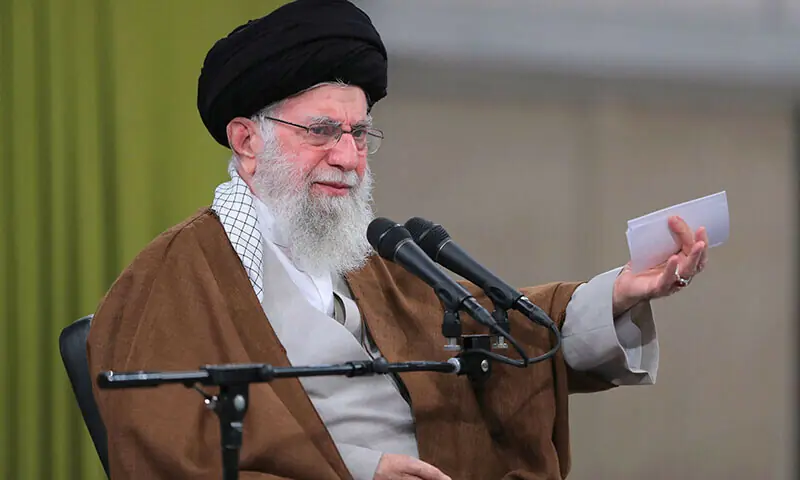
In recent hours, US President Donald Trump made a startling claim that Iran’s Supreme Leader Ayatollah Ali Khamenei had been assassinated. This came on heels of joint attacks by Israel and the United States against Iranian targets. Subsequent reports from Iranian media indicated Khamenei as steadfast and resolute.
At 86 years old, Khamenei ascended to Iran’s highest authority post in 1989 after Ayatollah Ruhollah Khomeini’s passing. Over his tenure, he withstood multiple student demonstrations, mass protests triggered by disputed elections, and brutal crackdowns on social movements. Despite being a conservative champion of the Islamic Revolution, Khamenei had endorsed Iran’s landmark 2015 nuclear deal with global powers, albeit tensions flared after US President Donald Trump withdrew from the accord in 2018.
Critical to his power lay loyalty from two key security institutions: the Islamic Revolutionary Guard Corps (IRGC) and Basij paramilitary forces, whose hundreds of thousands-strong volunteers upheld his commands. Israel has long viewed Khamenei as a destabilizing force, citing his alleged support for militant allies like Hizballah.
During a 12-day air war in June 2025, Israeli Defence Minister Israel Katz vowed to assassinate the supreme leader. In response, Khamenei had to go into hiding, revealing deep-seated intelligence penetration of Iran by Israeli forces. Yet, he survived this confrontation and continues to assert himself during regional turmoil.
While under constant security, Khamenei’s public appearances were tightly controlled—never announced in advance or broadcast live. He has never ventured abroad; a precedent set when the Islamic republic’s top leader returned from exile post-1979. His last known foreign trip was an official visit to North Korea in 1989.
Khamenei’s health remains under speculation, given his age and history of assassination attempts during his career. Despite this concern, he continued to exercise power over Iran’s political, military, and religious institutions since becoming the supreme leader in 1989.
As a crucial figure who defied predictions of succession, Khamenei faced multiple challenges but remained unyielding under pressure from the Assembly of Experts, whose meeting in 1989 chose him as the new top authority. He worked with six elected presidents yet always sided with hardline factions and staunchly opposed reforms that sought to ease Iran’s international isolation.
Despite his prominence behind closed doors, Khamenei is one of the most powerful backstage figures in Iran. His family dispute from the 1980s further highlights his complex personal life, with his sister Badri fleeing to Iraq amidst a religious conflict during war years.
BYD, the world’s No. 1 NEV brand, in partnership with Mega Motor Company (MMC), is…
Karachi, Pakistan – September 18, 2026: Mashreq, one of the leading financial institutions in the…
The Aga Khan University's (AKU) Centre for Innovation in Medical Education (CIME), Karachi, hosted SIMPACT…
Meezan Bank, Pakistan's premier Islamic bank, once again partnered with The Indus Hospital & Health…
Pakistan’s leading digital microfinance bank, Mobilink Bank, and Yango, part of the global technology company…
Pakistan’s freelancing market is rapidly emerging, and the export earnings of Pakistani freelancers are expected…
This website uses cookies.
