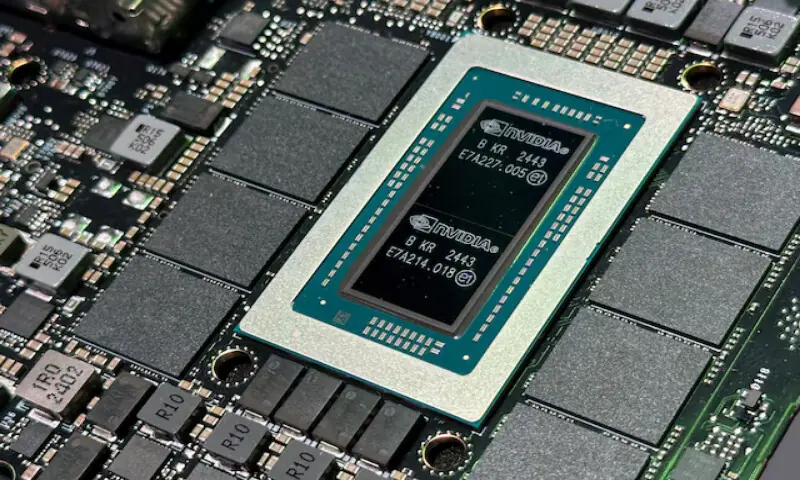
The US Department of Commerce has issued new guidelines aimed at closing a potential loophole that may have allowed sophisticated AI chips from companies like Nvidia to be exported to subsidiaries of Chinese firms located outside China.
This unexpected guidance suggests that high-tech components, including the most advanced Blackwell processors from Nvidia, might have been making their way to these overseas subsidiaries despite US efforts to limit semiconductor exports to Chinese entities.
The new measures were posted on the Commerce Department’s website following a confidential paper about the loophole which was circulated in Washington. The paper, dated Friday, does not list an author and indicates that many chips may have been exported during the Trump administration.
A chip industry insider estimated hundreds of thousands of advanced chips could have been shipped to these subsidiaries over the year.
The Bureau of Industry and Security (BIS) stated it would enforce license requirements for advanced chips to entities headquartered in China when they are located outside the country. The BIS spokesperson said, “BIS will continue to enforce export controls rigorously to safeguard critical American technology.”
This new guidance does not affect Nvidia, which already operates under a clear license requirement from the Commerce Department. AMD, another major producer of AI chips, did not immediately respond to requests for comment.
The loophole was created when the Commerce Department announced in May 2025 that it would not enforce the AI Diffusion rule issued at the end of the Biden administration. This rule had licensing requirements governing global access to AI chips.
Chris McGuire, a former State Department official and technology security expert, said closing this particular loophole is significant but noted another remains open where high-end AI chips made by foundries like TSMC are not subject to extra due diligence if they are destined for Chinese front companies. The spokesman for TSMC declined to comment on the new guidance.
The updated rules do not require data centers to stop using these advanced chips or halt servicing of related computing equipment such as servers.
The Aga Khan University's (AKU) Centre for Innovation in Medical Education (CIME), Karachi, hosted SIMPACT…
Meezan Bank, Pakistan's premier Islamic bank, once again partnered with The Indus Hospital & Health…
Pakistan’s leading digital microfinance bank, Mobilink Bank, and Yango, part of the global technology company…
Pakistan’s freelancing market is rapidly emerging, and the export earnings of Pakistani freelancers are expected…
To celebrate the release of Atif Aslam’s highly anticipated new album, Subah Aye Na, Spotify…
KARACHI: Supernet Technologies Limited (STL) is looking to strengthen its working-capital capacity as a growing…
This website uses cookies.
