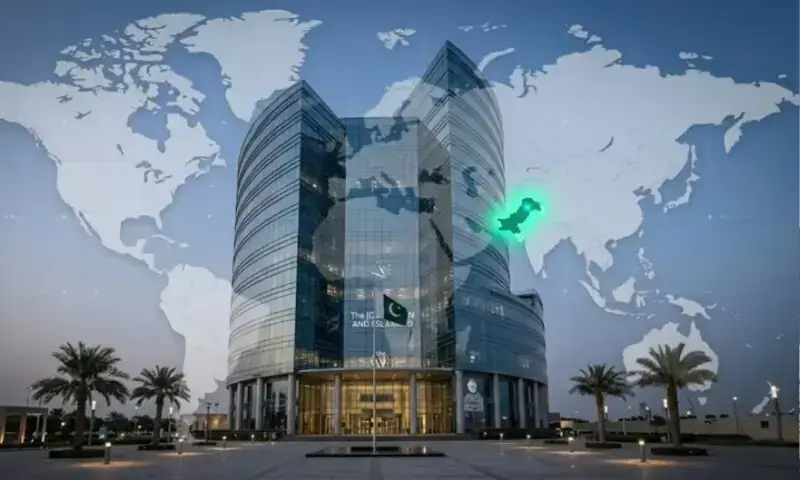
The World Bank has reclassified Pakistan from the South Asia grouping into the newly expanded “Greater Middle East” regional bloc. This move, as per the April 2026 economic update, places Pakistan and Afghanistan in the MENAAP grouping, increasing members from 22 to 24.
The new grouping includes 14 countries from the Middle East and eight from North Africa such as Saudi Arabia, UAE, Egypt, Iran, and Israel. The World Bank describes this move as administrative and analytical, but experts believe it could significantly impact Pakistan’s economic trajectory in areas like energy, inflation, and remittances.
Previously grouped with economies like India, Bangladesh, and Sri Lanka, Pakistan will now be compared to wealthier Gulf economies and structurally similar developing states. This reclassification reflects shifting economic realities, as Pakistan’s financial system is closely tied to remittances from the Gulf region and shares challenges with Middle Eastern nations such as population pressures, job creation, regional instability, and a relatively constrained private sector.
The World Bank groups countries based on income levels and regional characteristics. Income classification determines lending terms while regional grouping influences policy analysis, economic comparisons, and development strategies. Analysts suggest that this move could present both risks and opportunities for Pakistan. On one hand, it may benefit from more relevant policy comparisons and lessons in energy management, state-led planning, and employment generation from Middle Eastern economies. On the other hand, comparisons with richer economies like Saudi Arabia and UAE could make Pakistan’s performance appear weaker to global investors, potentially affecting its economic perception.
Pakistan is the most populous country in the new grouping, which could strengthen its case for greater development funding. However, competition for World Bank resources may intensify, particularly with lower-income members such as Egypt, Jordan, Tunisia, and Yemen. Experts note that if Pakistan leverages its inclusion to attract direct investment and deepen trade ties with Gulf economies, this shift could prove decisive in achieving long-term economic stability.
The Aga Khan University's (AKU) Centre for Innovation in Medical Education (CIME), Karachi, hosted SIMPACT…
Meezan Bank, Pakistan's premier Islamic bank, once again partnered with The Indus Hospital & Health…
Pakistan’s leading digital microfinance bank, Mobilink Bank, and Yango, part of the global technology company…
Pakistan’s freelancing market is rapidly emerging, and the export earnings of Pakistani freelancers are expected…
To celebrate the release of Atif Aslam’s highly anticipated new album, Subah Aye Na, Spotify…
KARACHI: Supernet Technologies Limited (STL) is looking to strengthen its working-capital capacity as a growing…
This website uses cookies.
