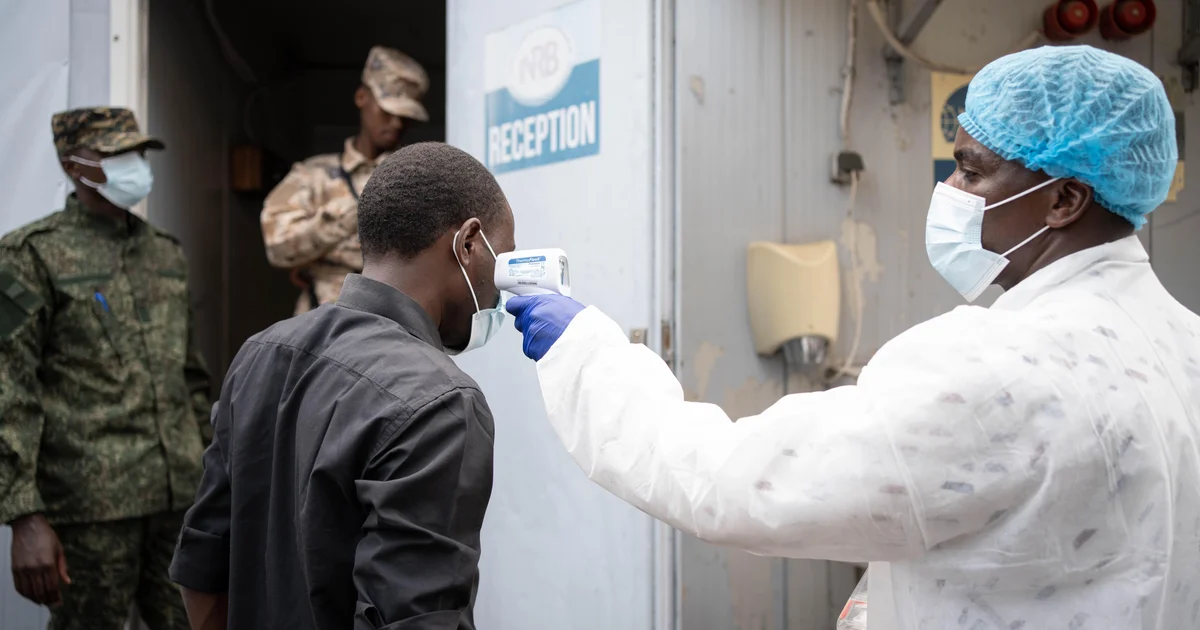
Geneva – The World Health Organization (WHO) on Wednesday stated that the risk of the Democratic Republic of Congo’s deadly Ebola outbreak is currently high at national and regional levels but low worldwide. WHO experts said investigations into its origins are ongoing, suggesting it likely began a couple of months ago due to the scale of the situation in eastern DRC.
“WHO assesses the risk of the epidemic as high at the national and regional levels, and low at the global level,” said WHO chief Tedros Adhanom Ghebreyesus. So far, 51 cases have been confirmed in the DRC, primarily in Ituri and North Kivu provinces, though the actual scale of the epidemic is much larger.
Uganda has also reported two confirmed cases in Kampala, including one death, while a U.S. national working in the DRC tested positive and was transferred to Germany for treatment. American doctor Peter Stafford, whose family lived with him in the DRC, was also evacuated to Germany for care.
Tedros warned of serious concerns about further spread and deaths due to nearly 600 suspected cases and 139 suspected deaths. He expects these numbers to increase as more time elapses since the virus began circulating before the outbreak was detected.
On Sunday, Tedros declared the situation a public health emergency of international concern, triggering global responses. The WHO emergency committee convened on Tuesday, agreeing that while the current situation meets this level, it does not satisfy criteria for a pandemic emergency.
WHO technical officer Anais Legand said investigations are underway to determine how long Ebola has been spreading in eastern DRC. Efforts include contact tracing and isolating confirmed cases to cut transmission chains.
U.S. Secretary of State Marco Rubio criticized the WHO’s late identification of the outbreak, while President Trump initiated a U.S. withdrawal from the organization over its handling of COVID-19. Experts warned that this move could impact global health efforts, especially in lower-income countries. Tedros responded by suggesting Rubio’s criticism may stem from misunderstanding how international health regulations work and emphasizing WHO’s support for countries rather than replacing their roles in outbreak responses.
The Aga Khan University's (AKU) Centre for Innovation in Medical Education (CIME), Karachi, hosted SIMPACT…
Meezan Bank, Pakistan's premier Islamic bank, once again partnered with The Indus Hospital & Health…
Pakistan’s leading digital microfinance bank, Mobilink Bank, and Yango, part of the global technology company…
Pakistan’s freelancing market is rapidly emerging, and the export earnings of Pakistani freelancers are expected…
To celebrate the release of Atif Aslam’s highly anticipated new album, Subah Aye Na, Spotify…
KARACHI: Supernet Technologies Limited (STL) is looking to strengthen its working-capital capacity as a growing…
This website uses cookies.
