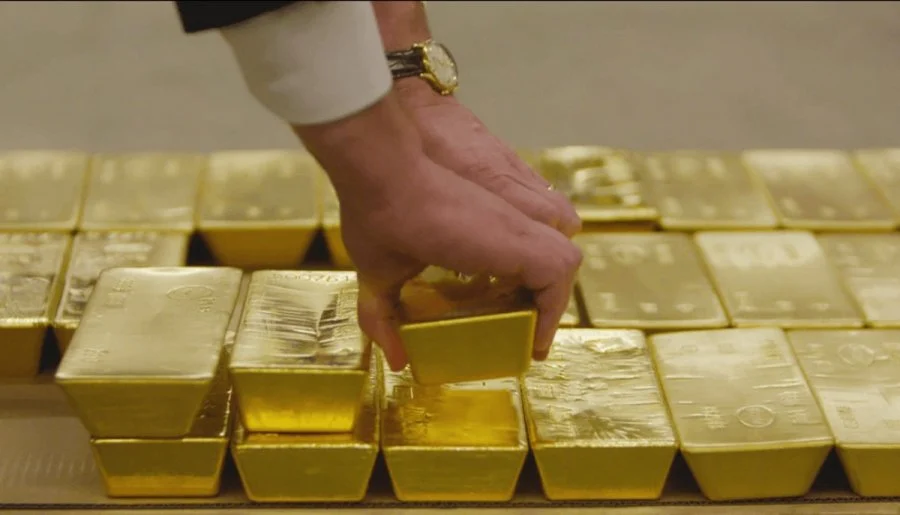
Gold prices plummeted 11 percent over the past week, marking their steepest weekly drop since 1983 amid global tensions related to Iran’s conflict. Since the onset of this conflict, gold has fallen more than 14 percent.
Market analysts attribute the decline primarily to expectations around interest rates. Traders now anticipate that the US Federal Reserve will maintain rates steady for the remainder of the year, making income-generating investments like bonds more appealing compared to gold, which does not yield returns.
A stronger US dollar, with its index rising nearly 2 percent since the conflict began, has also negatively impacted gold prices as it makes the precious metal more expensive for international buyers.
Recent gains in gold may be cooling after a robust rally that saw the price surge to record highs of $5,000 per ounce earlier this year before slipping below $4,500 this week.
“Upward momentum has faded,” strategists at Dutch bank ING noted. “Some investors are selling gold to raise cash or rebalance portfolios.”
Despite the recent downturn, some analysts remain bullish on gold’s long-term prospects due to ongoing geopolitical uncertainty and inflation concerns.
The Aga Khan University's (AKU) Centre for Innovation in Medical Education (CIME), Karachi, hosted SIMPACT…
Meezan Bank, Pakistan's premier Islamic bank, once again partnered with The Indus Hospital & Health…
Pakistan’s leading digital microfinance bank, Mobilink Bank, and Yango, part of the global technology company…
Pakistan’s freelancing market is rapidly emerging, and the export earnings of Pakistani freelancers are expected…
To celebrate the release of Atif Aslam’s highly anticipated new album, Subah Aye Na, Spotify…
KARACHI: Supernet Technologies Limited (STL) is looking to strengthen its working-capital capacity as a growing…
This website uses cookies.
