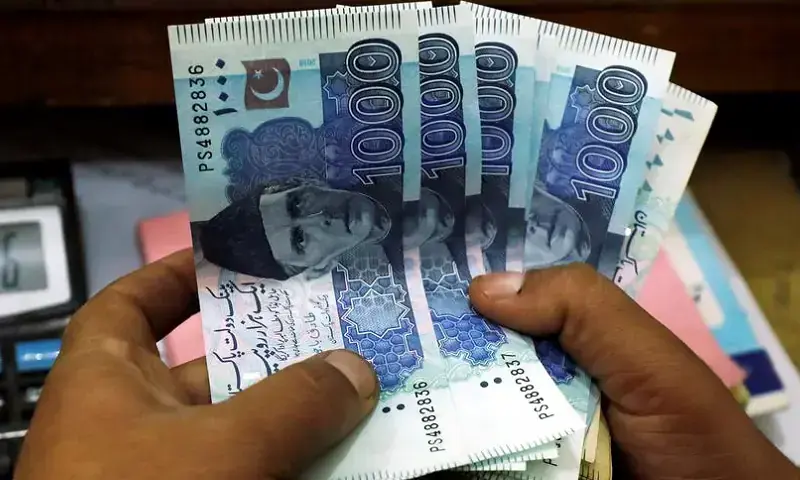
The government’s borrowing spree from banks this fiscal year has reached unprecedented levels, raising concerns about the economy’s future trajectory. Despite an increase in revenue collections compared to the same period last year, the state borrowed nearly Rs1.9 trillion in the first seven months of FY26, which is almost five times more than it did a year ago.
This surge in government borrowing has left little room for the private sector to access capital. Experts warn that with persistent tight monetary policies despite low inflation levels, the private sector’s performance remains weak—far from capable of stimulating economic growth.
According to figures issued by the State Bank, the government borrowed Rs1.912 trillion during 7MFY26 from commercial banks compared to just Rs408 billion a year prior. However, this borrowing pattern indicates that most of it occurred in the latter half of FY25, when total borrowing hit Rs5.4 trillion.
Given these figures, the situation is even more dire this fiscal year, with the government already having borrowed about Rs2 trillion. If this borrowing pace continues, the cumulative amount could exceed last year’s figure by a significant margin.
The alarming aspect here is that the government had previously borrowed Rs8.5 trillion in FY24 to meet rising current expenditures. Interest payments accounted for nearly 80% of total spending during that fiscal year, totaling around Rs8 trillion. This financial strain underscores why the government has no choice but to continue borrowing and cut development spending—a trend observed over the last three years.
Last month, the State Bank reduced the Cash Reserve Requirement (CRR) for banks from 6% to 5%, thus enabling them to hold more liquidity. However, this influx of funds is expected primarily to benefit government paper investments rather than stimulate new private sector ventures. Business owners and industrialists have been mostly focusing on securing working capital, indicating a lack of interest in long-term projects or expansions.
Financial experts point to several reasons behind the reluctance of the private sector to engage in such activities. Firstly, prevailing interest rates remain twice as high as current inflation levels, which is particularly pronounced compared to other regional markets. Secondly, banks preferentially opt for risk-free profits from government securities due to fears over potential business defaults amid current conditions.
Additionally, rising input costs—especially for energy supplies—and increased taxes have compounded the challenges of new investment initiatives. Corrupt practices within the Federal Board of Revenue add further complexity. Lastly, the uncertain political climate and escalating regional security concerns exacerbate this situation significantly.
Financial sector insiders believe that these factors make it inadvisable to embark on any substantial new long-term investments without a more favorable domestic and international environment. Consequently, many Pakistanis have been relocating their businesses and operations to Central Asia, Africa, and Mexico, where investment climates are considered more conducive.
The State Bank’s decision to reduce the CRR indeed offers an immediate boost in liquidity for government bonds; however, this additional capital is likely directed towards sustaining current government activities rather than promoting private sector growth. The prevailing conditions necessitate a cautious approach until such time as external and internal stability improves significantly.
The Aga Khan University's (AKU) Centre for Innovation in Medical Education (CIME), Karachi, hosted SIMPACT…
Meezan Bank, Pakistan's premier Islamic bank, once again partnered with The Indus Hospital & Health…
Pakistan’s leading digital microfinance bank, Mobilink Bank, and Yango, part of the global technology company…
Pakistan’s freelancing market is rapidly emerging, and the export earnings of Pakistani freelancers are expected…
To celebrate the release of Atif Aslam’s highly anticipated new album, Subah Aye Na, Spotify…
KARACHI: Supernet Technologies Limited (STL) is looking to strengthen its working-capital capacity as a growing…
This website uses cookies.
