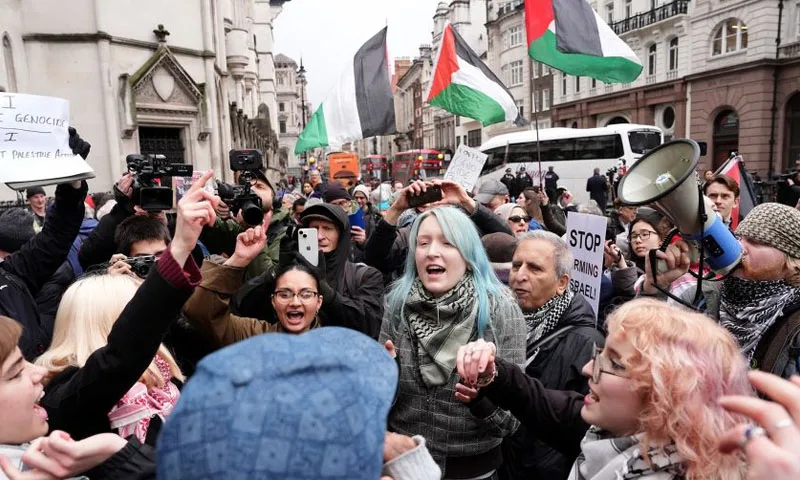
LONDON: In a significant judicial blow to its anti-terrorism strategy, Britain’s High Court has ruled that Prime Minister Keir Starmer’s decision to ban pro-Palestinian campaign group “Palestine Action” as a terrorist organization was unlawful. The proscription remains in place pending an appeal but will be reviewed during the ensuing legal process.
The decision came after the government banned Palestine Action following alleged escalations of “direct action” against Israeli-linked companies operating in Britain, including the sabotage at Elbit Systems’ factory and a June break-in at Brize Norton air base. These actions led to significant property damage and injuries.
Palestine Action’s ban followed an incident in July 2024 where activists caused around £1 million worth of damages during their raid on an Elbit System’s factory. A police officer was reportedly struck with a sledgehammer, intensifying the government’s argument that these actions constituted terrorism.
In response to the court ruling, Interior Minister Shabana Mahmood vowed to challenge the decision at the Court of Appeal. The ban places Palestine Action in the same category as groups such as Islamic State and al Qaeda, carrying a maximum prison sentence of 14 years for membership.
The legal challenge has broader implications, particularly since more than 2,000 individuals have been arrested under the proscription in the two weeks following its implementation. The Metropolitan Police announced they would shift their focus to gathering evidence against those expressing support for Palestine Action rather than making immediate arrests.
Civil liberties groups, including Amnesty International, had previously called for the ban’s removal, citing infringements on fundamental rights. Irish novelist Sally Rooney highlighted potential repercussions, warning that her work might be withdrawn from sale due to public support of Palestine Action.
The High Court’s judgment has cast a shadow over the British government’s anti-terrorism strategy. As cases continue to unfold in the wake of Friday’s ruling, including retrials sought by prosecutors for those acquitted in previous incidents, questions are being raised about the balance between national security measures and freedom of expression.
This decision could have wide-ranging effects not only on ongoing legal proceedings but also on how future pro-Palestinian protesters navigate their rights. The case marks a significant setback for the government, raising doubts over the efficacy of blanket proscriptions in managing political dissent.
Prime Minister Shehbaz Sharif pledged to provide relief for economically vulnerable segments of society amid…
Royal expert Robert Jobson has identified Lady Louise, daughter of Prince Edward and Duchess Sophie,…
UN Convention on the Conservation of Migratory Species of Wild Animals (CMS) approved 40 new…
Prime Minister Shehbaz Sharif pledged relief for economically vulnerable groups amid the Gulf crisis. He…
Camila Morrone Discusses Empowering Women Through Motherhood American-Argentine actress and model Camila Morrone recently spoke…
French Finance Minister Roland Lescure spoke at a news conference about upcoming G7 talks focused…
This website uses cookies.
