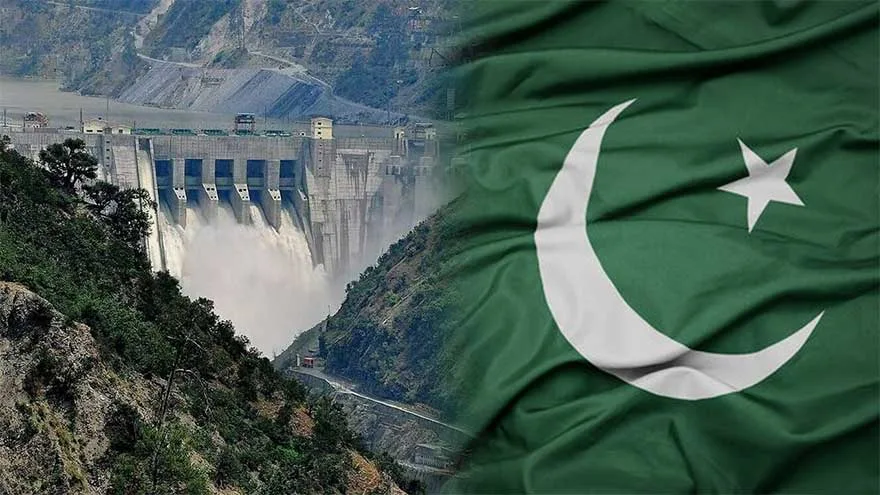
India’s Indus Waters Treaty in Jeopardy
In April 2025, India announced it was placing the Indus Waters Treaty (IWT) in abeyance following the Pahalgam attack. The IWT, signed in September 1960 and brokered by the World Bank, has survived three wars and decades of political hostility between the two nuclear-armed neighbours.
The treaty regulates the use of rivers flowing through the Indus basin between India and Pakistan. Under the agreement, the three Western Rivers – Indus, Jhelum, and Chenab – are allocated primarily to Pakistan, while the three Eastern Rivers – Ravi, Beas, and Sutlej – are allocated to India.
For Pakistan, the treaty is more than a diplomatic arrangement. The Indus river system is its primary source of irrigation, sustaining agriculture, food security, textile industry, and significant electricity generation. Any prolonged disruption to these water flows would have profound economic, environmental, and humanitarian consequences.
Pakistan Considers Water Dispute as National Security Matter
Following the April 24, 2025 meeting of the National Security Committee, the Foreign Office stated that the Indus Waters Treaty is a binding international agreement with no provision for unilateral suspension. The statement further declared water to be a vital national interest of Pakistan and any attempt to stop or divert the flow of water belonging to Pakistan as per the treaty would be considered an act of war.
The Nuclear Risk
Scientific research suggests that the consequences of a large-scale nuclear conflict between India and Pakistan would not remain confined to South Asia. A study published in ‘Science Advances’ models a scenario where India uses 100 strategic nuclear weapons against urban centres, with Pakistan responding with 150. The resulting firestorms could inject between 16 and 36 teragrams of black carbon into the atmosphere, reducing global sunlight by 20-35%, lowering average global temperatures by 2-5°C, decreasing precipitation by 15-30%, and disrupting agricultural production for more than a decade.
The Aga Khan University's (AKU) Centre for Innovation in Medical Education (CIME), Karachi, hosted SIMPACT…
Meezan Bank, Pakistan's premier Islamic bank, once again partnered with The Indus Hospital & Health…
Pakistan’s leading digital microfinance bank, Mobilink Bank, and Yango, part of the global technology company…
Pakistan’s freelancing market is rapidly emerging, and the export earnings of Pakistani freelancers are expected…
To celebrate the release of Atif Aslam’s highly anticipated new album, Subah Aye Na, Spotify…
KARACHI: Supernet Technologies Limited (STL) is looking to strengthen its working-capital capacity as a growing…
This website uses cookies.
