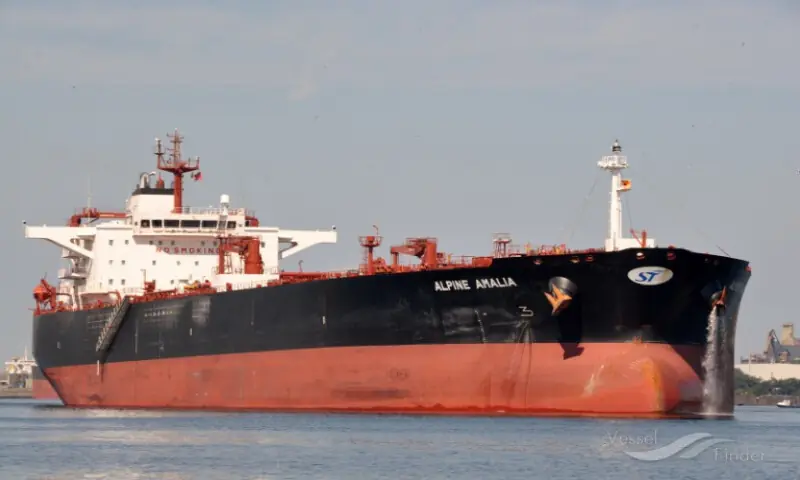
Iran has granted special permission for two Pakistan-linked ships to pass through the Strait of Hormuz. These include a Pakistan National Shipping Corporation (PNSC) ship “Multan” and a chartered tanker “P. Aliki”. The latter is carrying approximately 85 million litres of crude oil.
The vessels successfully crossed the critical waterway, with both expected to reach Pakistan by March 31. This comes after weeks of the ships being stranded in the Gulf due to escalating regional conflict.
Since the hostilities began about four weeks ago, Iran has reportedly targeted several vessels in the Gulf, restricting movement through the Strait of Hormuz – a vital artery for around one-fifth of global crude oil and liquefied natural gas shipments. This disruption has contributed to rising global energy prices and concerns over supply chains.
Earlier on March 16, another PNSC-operated tanker “Karachi” successfully navigated the strait amid heightened tensions. At that time, Iran had warned it could target vessels linked to the United States and its allies but assured safe passage for ships from friendly countries.
Senator Mushahid Hussain Sayed claimed that Iran allowed the “Karachi” tanker to pass after the shipment was settled in Chinese currency, yuan, indicating a shift in regional dynamics. The Strait of Hormuz remains one of the world’s most critical energy transit chokepoints, and any disruption continues to fuel uncertainty in global markets.
The Aga Khan University's (AKU) Centre for Innovation in Medical Education (CIME), Karachi, hosted SIMPACT…
Meezan Bank, Pakistan's premier Islamic bank, once again partnered with The Indus Hospital & Health…
Pakistan’s leading digital microfinance bank, Mobilink Bank, and Yango, part of the global technology company…
Pakistan’s freelancing market is rapidly emerging, and the export earnings of Pakistani freelancers are expected…
To celebrate the release of Atif Aslam’s highly anticipated new album, Subah Aye Na, Spotify…
KARACHI: Supernet Technologies Limited (STL) is looking to strengthen its working-capital capacity as a growing…
This website uses cookies.
