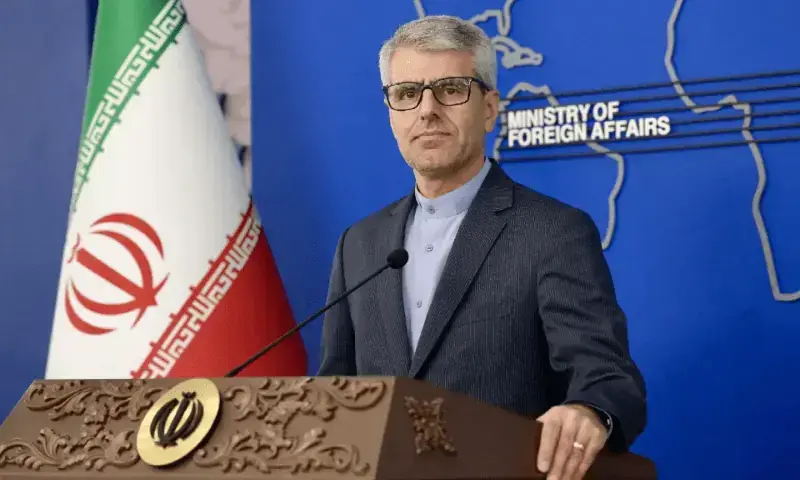
In anticipation of Israeli Prime Minister Benjamin Netanyahu’s upcoming visit to Washington for crucial talks with US negotiators, Iran issued a warning about the potential “destructive” influence on diplomatic efforts. “Our negotiating party is America,” declared Iranian foreign ministry spokesman Esmail Baqaei at a recent press briefing. “It is up to America to decide whether it can act independently of the pressures and destructive influences that threaten our region.”
Tehran’s commitment to diplomacy remained unwavering, as they resumed talks with Washington in Muscat this week following months without engagement since early June’s aborted negotiations. The previous round saw Israel conducting an unprecedented bombing campaign against Iran, culminating in a 12-day war.
During the conflict, Israeli forces targeted senior Iranian military officials, nuclear scientists and facilities, along with residential areas, while also launching US airstrikes on key Iranian nuclear sites. In response, Iran retaliated by striking Israeli targets and striking back at the largest US military base in the Middle East, located in Qatar.
“We learned from our June experience that any diplomatic process must be conducted independently of external pressures,” stressed Baqaei, emphasizing Tehran’s focus would remain firmly on resolving its nuclear file for sanctions relief. “We are determined to secure Iran’s national interests through diplomacy.”
Netanyahu echoed these sentiments, stating his belief in the necessity of incorporating limitations on ballistic missiles and halting support for the Iranian axis into any future negotiations. These discussions were precipitated by threats from Washington and the deployment of a US aircraft carrier group to the region amid the fallout following Iran’s crackdown on anti-government protests.
These demonstrations began as peaceful demonstrations but escalated, culminating in violent confrontations involving killings and vandalism. Iranian authorities attributed these events not to internal factors alone, but also cited external influences, specifically citing involvement from the United States and Israel.
As Netanyahu prepares for his visit, Washington faces a complex diplomatic landscape shaped by Iran’s renewed commitment to its nuclear file coupled with lingering threats of sanctions and military action, all while navigating through regional turmoil.
The Aga Khan University's (AKU) Centre for Innovation in Medical Education (CIME), Karachi, hosted SIMPACT…
Meezan Bank, Pakistan's premier Islamic bank, once again partnered with The Indus Hospital & Health…
Pakistan’s leading digital microfinance bank, Mobilink Bank, and Yango, part of the global technology company…
Pakistan’s freelancing market is rapidly emerging, and the export earnings of Pakistani freelancers are expected…
To celebrate the release of Atif Aslam’s highly anticipated new album, Subah Aye Na, Spotify…
KARACHI: Supernet Technologies Limited (STL) is looking to strengthen its working-capital capacity as a growing…
This website uses cookies.
