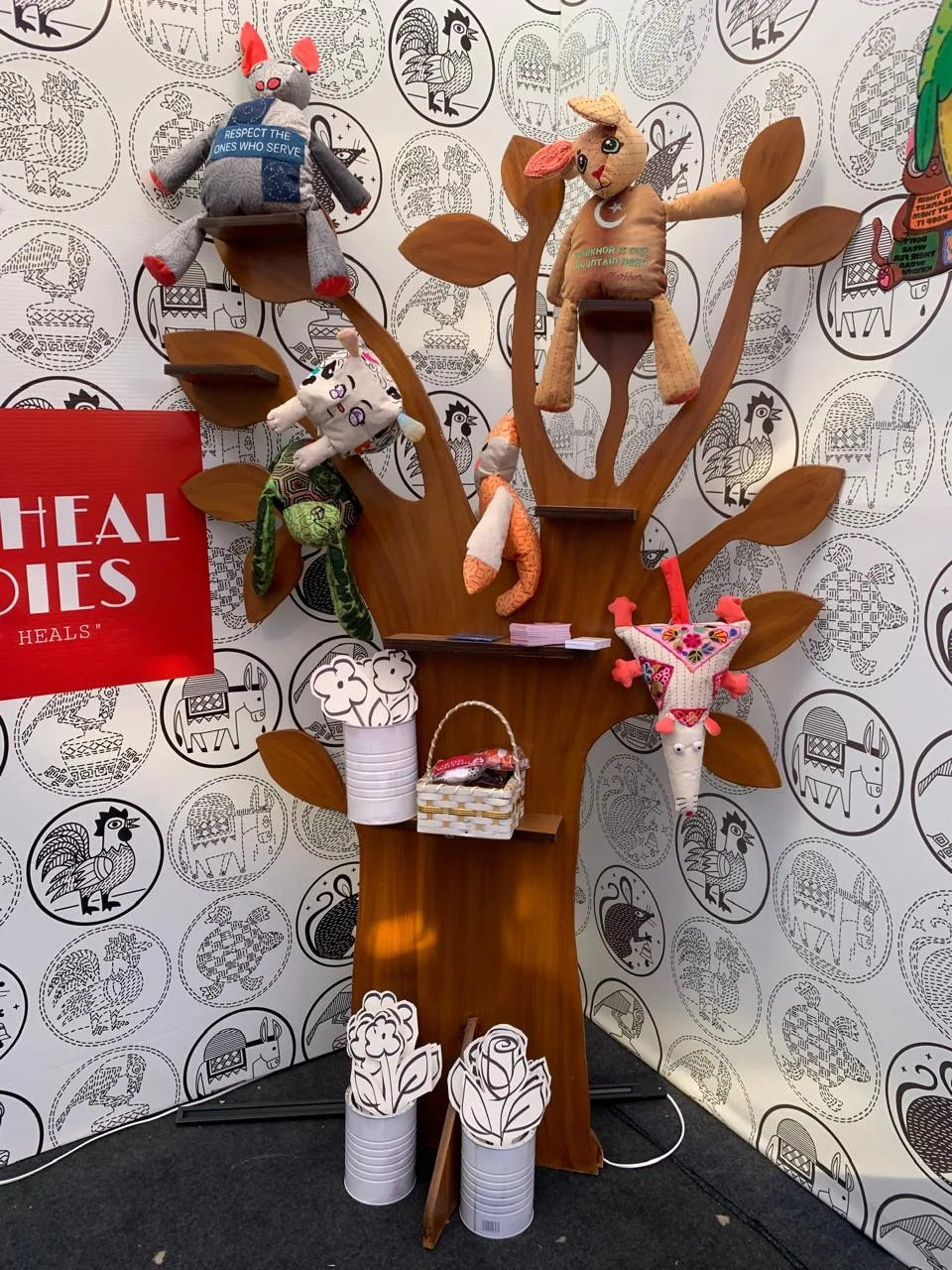
Pakistani youth are second to none in intelligence and talent, and a student from a private university in Karachi has proven this by introducing therapeutic toys designed to support children’s treatment. Afifa Rana, who is associated with the Department of Textile Designing, has developed therapeutic soft toys using Super Absorbent Polymer (SAP). These toys provide comfort and relief to children suffering from colds, flu, fever, or minor physical discomfort.
According to Afifa Rana, the designs of these toys are inspired by rare, indigenous, and endangered animals found in Pakistan, with the aim of encouraging empathy, kindness, and awareness about animal welfare among children. The project seeks to transform conventional toys into multifunctional products that support both physical well-being and emotional development.
Afifa explains that her project demonstrates how active materials and socially responsible design can be effectively integrated to create meaningful, educational, and therapeutic products for children. Another distinctive feature of these toys is that they are made from recycled textile waste. Discarded fabric materials are converted into safe, soft, and functional filling, whereas stuffed toys are typically made using polyester cotton.
This sustainability-driven and eco-friendly approach not only introduces environmental responsibility into children’s products but also helps reduce industrial waste.
The Aga Khan University's (AKU) Centre for Innovation in Medical Education (CIME), Karachi, hosted SIMPACT…
Meezan Bank, Pakistan's premier Islamic bank, once again partnered with The Indus Hospital & Health…
Pakistan’s leading digital microfinance bank, Mobilink Bank, and Yango, part of the global technology company…
Pakistan’s freelancing market is rapidly emerging, and the export earnings of Pakistani freelancers are expected…
To celebrate the release of Atif Aslam’s highly anticipated new album, Subah Aye Na, Spotify…
KARACHI: Supernet Technologies Limited (STL) is looking to strengthen its working-capital capacity as a growing…
This website uses cookies.
