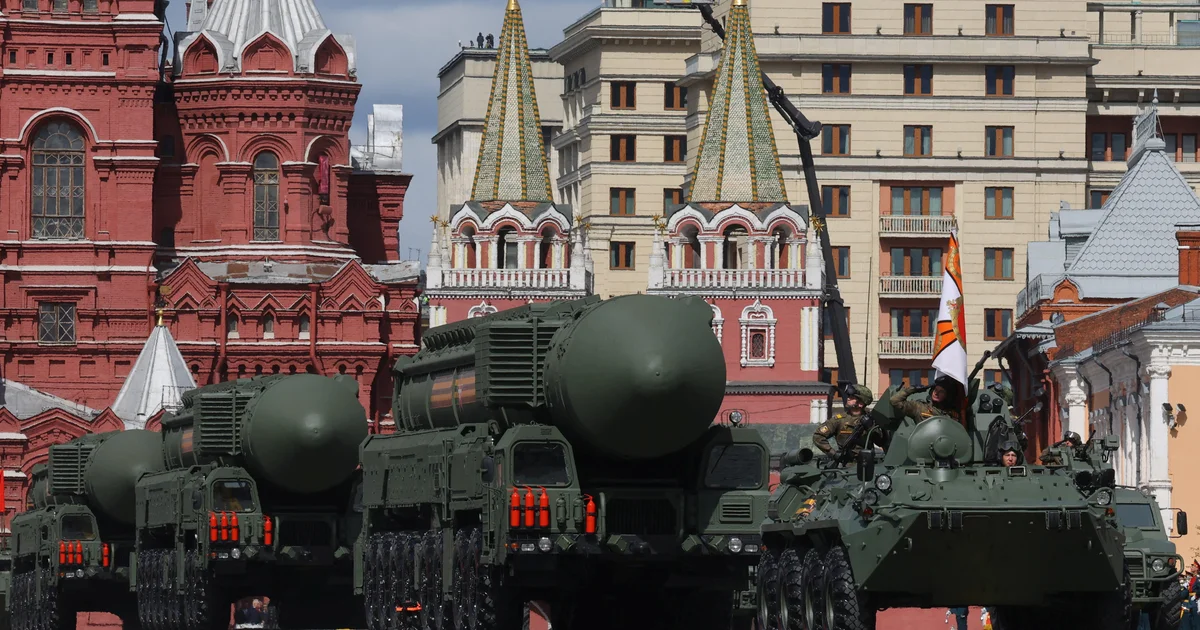
As the New START nuclear arms reduction treaty winds down, Russia has reaffirmed its commitment to maintaining strategic limits on nuclear arsenals, provided that the U.S. does the same. Russian Foreign Minister Sergey Lavrov made this clear during a speech before the lower house of Russia’s parliament on Wednesday.
“This moratorium will remain in effect as long as the United States adheres to these established constraints,” Lavrov stated, echoing previous comments and underscoring Moscow’s unwavering stance.
The New START treaty, which went into effect in 2010 between the U.S. and Russia, limited strategic nuclear warheads to a total of 1,550 each side could deploy. Verification measures included on-site inspections and data exchanges designed for compliance.
Former President Joe Biden had previously extended this pact until February 2026 by five years, keeping it in force despite its original expiration date in February 2021. Russian President Vladimir Putin had indicated earlier that Russia would continue to adhere to the treaty’s core limits if the U.S. did so as well.
According to Dmitry Peskov, Russia’s chief spokesman, “We will remain committed to a responsible and thorough approach towards stability with nuclear weapons based on our national interests.” This commitment has not wavered since the pact expired last year.
Meanwhile, debate rages in the U.S. over the future of strategic arms control. President Donald Trump had previously argued for including China’s growing arsenal in any future agreements, though Beijing remains noncommittal about participating in trilateral talks.
Last week, however, the U.S. and Russia agreed to restore formal military communications that had been suspended prior to Russia’s invasion of Ukraine. There has yet to be indication of progress toward a new agreement between these two nuclear giants.
In response, Mr. Trump directed the Pentagon in October to resume testing of nuclear weapons “on an equal basis” with other countries’ tests, ending a U.S.-backed pause since the end of the Cold War. This move was made under the pretense that Russia could conduct similar tests and that it would be reciprocated if any other state party to the Comprehensive Nuclear-Test-Ban Treaty conducted such activities.
In response, Putin directed his government to submit proposals on resuming nuclear weapons testing in Russia, though he noted Russia’s adherence to international nuclear disarmament treaties. He emphasized that if any state party violates these agreements, Russia would be obligated to take reciprocal measures.
As the New START treaty approaches its final chapter, tensions over future arms control negotiations continue unabated between the U.S. and Russia.
The Aga Khan University's (AKU) Centre for Innovation in Medical Education (CIME), Karachi, hosted SIMPACT…
Meezan Bank, Pakistan's premier Islamic bank, once again partnered with The Indus Hospital & Health…
Pakistan’s leading digital microfinance bank, Mobilink Bank, and Yango, part of the global technology company…
Pakistan’s freelancing market is rapidly emerging, and the export earnings of Pakistani freelancers are expected…
To celebrate the release of Atif Aslam’s highly anticipated new album, Subah Aye Na, Spotify…
KARACHI: Supernet Technologies Limited (STL) is looking to strengthen its working-capital capacity as a growing…
This website uses cookies.
