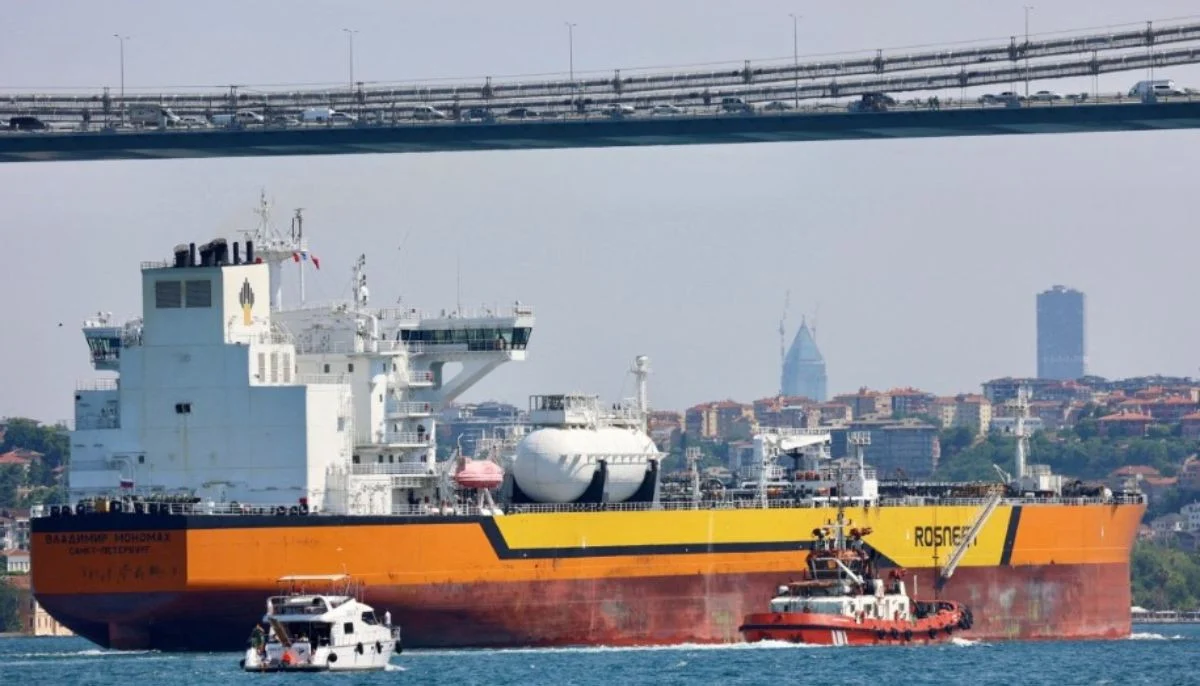
A fresh crisis in the Middle East has escalated with a U.S. submarine strike against an Iranian warship off Sri Lanka, disrupting critical oil and gas supply routes through the Strait of Hormuz for nearly five days. The U.S., attempting to mitigate the impact on energy markets, pledged to provide insurance and escort services for ships exporting from the region. Despite these efforts, at least 200 vessels have been forced into anchorages or remain offshore in major Gulf producers such as Iraq, Saudi Arabia, and Qatar.
Reuters reports that hundreds of other ships are unable to enter ports, with at least eight vessels having sustained damage since the conflict began on Saturday. On Wednesday, the Maltese-flagged container ship Safeen Prestige was damaged by a projectile while sailing toward the northern end of Hormuz, leading its crew to abandon ship.
The waters around Hormuz are essential for approximately one-fifth of global oil and liquefied natural gas (LNG) supply; their disruption is severe. Damage has included minor impacts on vessels like the Marshall Islands crude oil tanker Libra Trader and the Panama-flagged bulker Gold Oak, both hit by projectiles near Fujairah early Wednesday.
Qatar announced it would fully shut down its gas liquefaction operations for at least a month following attacks on its production facilities. QatarEnergy declared force majeure, halting LNG shipments in response to the conflict.
Iraq’s oil output was severely impacted as storage capacity ran out, preventing loading onto tankers. Meanwhile, Saudi Arabia, the United Arab Emirates (UAE), and Kuwait reported struggles to load their crude but have not yet cut production.
A rare voyage occurred on Tuesday when the Suezmax tanker Pola managed to navigate through Hormuz to Abu Dhabi for a cargo reload. The vessel temporarily disabled its Automatic Identification System (AIS) as it entered the Strait, reactivating later.
U.S. President Donald Trump tweeted that his administration had instructed the International Development Finance Corporation to offer political-risk insurance and financial guarantees to ensure maritime trade safety in the Gulf region.
“Regardless of circumstances, we will guarantee a free flow of energy across the world,” Trump wrote on social media. Insurance costs have surged, with rates increasing from customary levels where owners and charterers are familiar; marine insurers continue to provide protection for vessels facing threats.
Despite these efforts, oil prices dipped slightly but remain elevated since Saturday’s conflict began as U.S.-Israeli strikes disrupted Middle East energy supplies. Goldman Sachs has upgraded its forecasts for Brent crude in the second quarter to $76 per barrel from $66 initially, and $71 for WTI from $62.
The bank anticipates extended disruption of oil exports through Hormuz Strait and damage to production facilities. It also predicts significant declines in OECD inventories and Middle East production in March due to restricted flows.
Shipping industry expert Jakob Larsen at BIMCO pointed out that providing protection for all vessels operating in threatened areas is unfeasible, given the need for substantial military assets, including a large number of warships.
Asian refineries and petrochemical companies have faced output cuts because they cannot secure immediate replacement cargoes from Gulf suppliers. This has prompted some to consider sourcing more oil from Russia. Meanwhile, India’s Mangalore Refinery and Petronet LNG issued force majeure notices amid disruptions.
The U.S., with a 60% Asian oil dependency, has already increased its imports from other sources as a precautionary measure.
Saudi Aramco’s largest domestic refinery, Ras Tanura, was struck on Wednesday by unidentified projectiles, affecting Saudi Arabia’s crude export capacity.
Spotify has introduced SongDNA, a new immersive feature designed to transform how listeners discover and…
Prime Minister Shehbaz Sharif held a crucial review meeting at the Prime Minister's House in…
Usher recently spoke about disgraced music mogul Sean "Diddy" Combs, who was sentenced to four…
Italy Aims to End 12-Year Cup Absence as They Face Northern Ireland Italy, one of…
A petition challenging a Rs200 per litre hike in high-octane fuel prices has been filed…
The UK government has decided to release documents related to Andrew Mountbatten-Windsor's time as Trade…
This website uses cookies.
