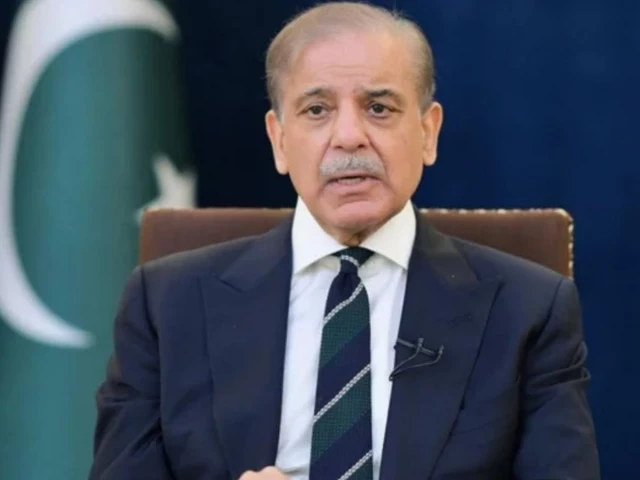
Prime Minister Shehbaz Sharif, steadfast in his commitment to alleviating economic burdens from ordinary citizens, made an informed decision not to raise prices of petroleum products amid escalating international oil costs. This move is a testament to his pledge and a critical part of the government’s strategy to counteract challenging global dynamics.
In a statement from the Prime Minister’s Office, Mr. Sharif underscored the current economic climate’s complexities, noting regional tensions exacerbating world markets. Despite these pressures, Pakistan remains resolute in its fiscal policies designed to offer substantial support.
He highlighted that this decision is part of broader government efforts aimed at easing financial hardships for the populace. The Prime Minister emphasized his commitment to beginning with administrative and governmental measures during these difficult times. He stated, “As a servant of Pakistan, I am resolved to start reducing the burden on the poor by first addressing our country’s elite.”
The prime minister pointed out that this decision comes in tandem with federal austerity measures and provincial government support. He noted a notable development as provinces are actively contributing alongside the federal administration.
Furthermore, Mr. Sharif stressed that efforts were being made through diplomatic channels to ensure sufficient crude oil supplies for domestic needs. He assured citizens that no one would be charged more than the fixed prices set by the government. Looking ahead, he expressed hope that global conditions would improve and stabilize international petroleum product pricing.
Last week’s decision to increase diesel and petrol prices saw a 20% hike—marking the first in a series of expected surges due to geopolitical disruptions affecting supply chains and pushing crude oil to its highest level in two years. Notably, this rise surpassed levels seen on global markets, with the government opting to allocate more funds from users of high-speed diesel who primarily utilize public transport and agricultural sectors.
Petroleum Minister Ali Pervaiz Malik announced these new prices immediately following Prime Minister Sharif’s decision. High-speed diesel will now cost Rs336 per litre while petrol stands at Rs321. The minister was accompanied by Deputy Prime Minister Ishaq Dar and Finance Minister Muhammad Aurangzeb during the announcement.
In parallel, the government increased petroleum levies on petrol to a record of Rs105.4 per litre but reduced them to Rs55 per litre for diesel. This comprehensive approach aims to balance revenue collection with fiscal responsibility, ensuring both federal and provincial entities work cohesively towards stabilizing petroleum prices.
The Aga Khan University's (AKU) Centre for Innovation in Medical Education (CIME), Karachi, hosted SIMPACT…
Meezan Bank, Pakistan's premier Islamic bank, once again partnered with The Indus Hospital & Health…
Pakistan’s leading digital microfinance bank, Mobilink Bank, and Yango, part of the global technology company…
Pakistan’s freelancing market is rapidly emerging, and the export earnings of Pakistani freelancers are expected…
To celebrate the release of Atif Aslam’s highly anticipated new album, Subah Aye Na, Spotify…
KARACHI: Supernet Technologies Limited (STL) is looking to strengthen its working-capital capacity as a growing…
This website uses cookies.
