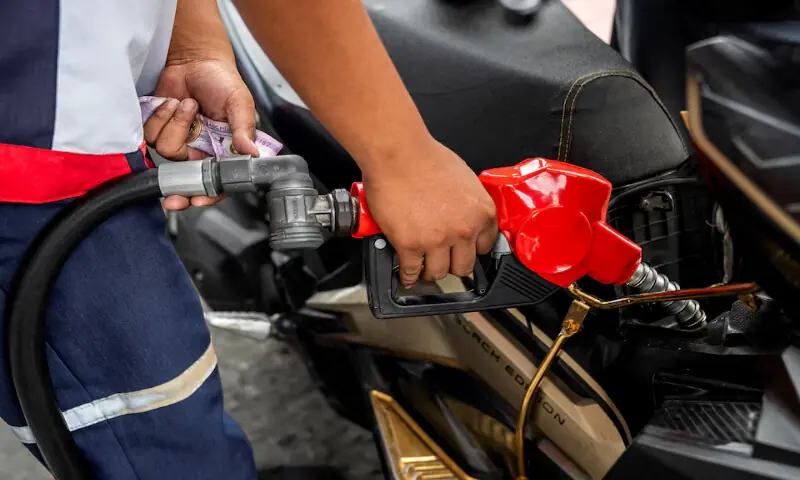
Governments in Asia are scrambling to find alternatives and insulate their economies from the worst of the energy crisis triggered by the Iran war. The disruption spurred the Asian Development Bank to cut its growth forecast for developing Asia and the Pacific to 4.7% this year and 4.8% in 2027, down from 5.1% for both years previously.
Overall oil imports to Asia plunged 30% in April on the year, to their lowest since October 2015, Kpler data shows. Fiscal strains are mounting across the region, particularly South Asia, as governments spend billions of dollars on subsidies and import duty waivers to compensate.
India’s state-dominated refining sector has kept fuel prices steady despite surging crude costs, losing about 100 rupees ($1.06) a litre on diesel and 20 rupees on gasoline, but some analysts forecast price hikes after state polls ended in April.
China, the world’s biggest oil importer, has shielded itself with sizeable reserves, a diverse energy supply chain and export curbs on fuel and fertiliser, although Beijing is making exceptions for some regional buyers.
Even as governments tap fiscal resources, forex reserves and oil inventories, the war’s economic impact on Asia has not been as bad as feared. Goldman Sachs trimmed 2026 growth forecasts for Japan and some Southeast Asian countries and slightly lifted inflation expectations.
Asia’s emerging market currencies have fallen furthest and to lower lows against the dollar, compared with global peers and the region’s bigger currencies. The Philippine peso has dropped more than 5%, the Thai baht and rupee more than 3% each and the rupiah more than 2.5%.
The South Asian economies of Pakistan, Bangladesh and Sri Lanka are the most vulnerable to the burdens triggered by the crunch. These countries use more of their resources on subsidising domestic public energy enterprises and shielding the final consumers from the energy price shock.
Responses across Asia are shaped by the circumstances of individual nations. For example, energy producer Indonesia has told operators to prioritise the domestic market over exports and is halting LNG shipments that were not under contract. Southeast Asia’s biggest economy plans to buy 150 million barrels from Russia by year-end.
The Aga Khan University's (AKU) Centre for Innovation in Medical Education (CIME), Karachi, hosted SIMPACT…
Meezan Bank, Pakistan's premier Islamic bank, once again partnered with The Indus Hospital & Health…
Pakistan’s leading digital microfinance bank, Mobilink Bank, and Yango, part of the global technology company…
Pakistan’s freelancing market is rapidly emerging, and the export earnings of Pakistani freelancers are expected…
To celebrate the release of Atif Aslam’s highly anticipated new album, Subah Aye Na, Spotify…
KARACHI: Supernet Technologies Limited (STL) is looking to strengthen its working-capital capacity as a growing…
This website uses cookies.
