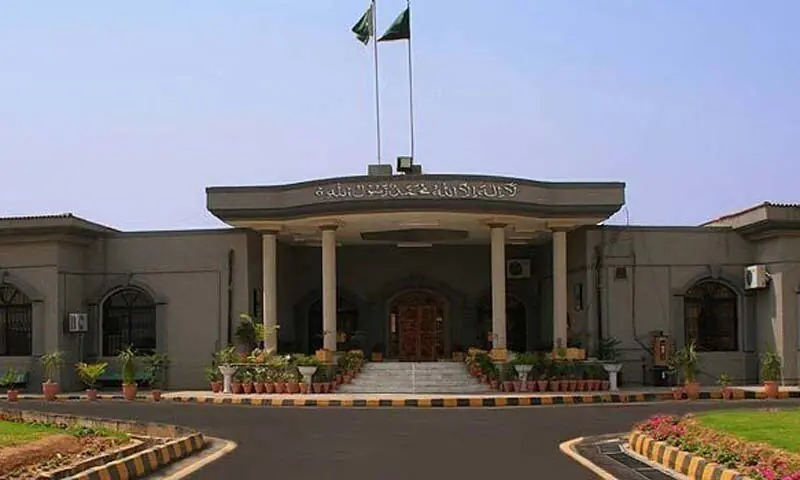
ISLAMABAD: In a significant decision that could reshape employment contract terms for mining and industrial workers across Pakistan, the Islamabad High Court (IHC) has ruled against M/s Reko Diq Mining Company. The court dismissed a petition filed by the company, which had challenged an employment contract clause stipulating exclusive jurisdiction in Islamabad.
The controversy centered around Rubina Musa, who was a safety officer at Reko Diq’s mining site in District Chagai, Balochistan. Her contract included Clause 14, stating disputes would be settled under Islamabad courts’ jurisdiction governed by the Islamabad Capital Territory laws. When Ms Musa’s employment ended in September 2024 and she filed grievances with the National Industrial Relations Commission (NIRC) bench in Quetta, the mining company argued that this move lacked legal authority due to Clause 14.
Ms Musa’s advocate, Senior Counsel Makhdoom Ali Khan, defended the clause by arguing it represented a voluntary agreement between parties. He maintained that such choices did not contravene public policy or violate the Contract Act of 1872. However, Justice Raja Inaam Ameen Minhas of the IHC disagreed.
Minhas observed that employment contracts are often “standard-form” agreements where employees have minimal bargaining power. The judge noted the respondent had no real choice but to sign, accepting whatever terms were laid out by the company. Invoking the doctrine of unconscionability, Minhas ruled that such clauses used to “oppress” workers must be scrutinized.
This ruling is in line with international precedents like Uber v. Heller from Canada and Lord Denning’s landmark theory. The IHC held that while entities have freedom to choose dispute resolution forums, such choices cannot infringe upon established statutory bodies designed for worker protection. In this case, the National Industrial Relations Commission (NIRC) remains a federal body with nationwide jurisdiction.
The court’s decision effectively clears the way for the NIRC Quetta bench to proceed with Ms Musa’s grievance. The IHC concluded that access to justice does not depend on private agreements but flows from the statute itself. By dismissing the petition, the IHC ensures the statutory forum maintains its integrity and legislative intent is upheld.
Published in Dawn, March 15th, 2026.
The Aga Khan University's (AKU) Centre for Innovation in Medical Education (CIME), Karachi, hosted SIMPACT…
Meezan Bank, Pakistan's premier Islamic bank, once again partnered with The Indus Hospital & Health…
Pakistan’s leading digital microfinance bank, Mobilink Bank, and Yango, part of the global technology company…
Pakistan’s freelancing market is rapidly emerging, and the export earnings of Pakistani freelancers are expected…
To celebrate the release of Atif Aslam’s highly anticipated new album, Subah Aye Na, Spotify…
KARACHI: Supernet Technologies Limited (STL) is looking to strengthen its working-capital capacity as a growing…
This website uses cookies.
